
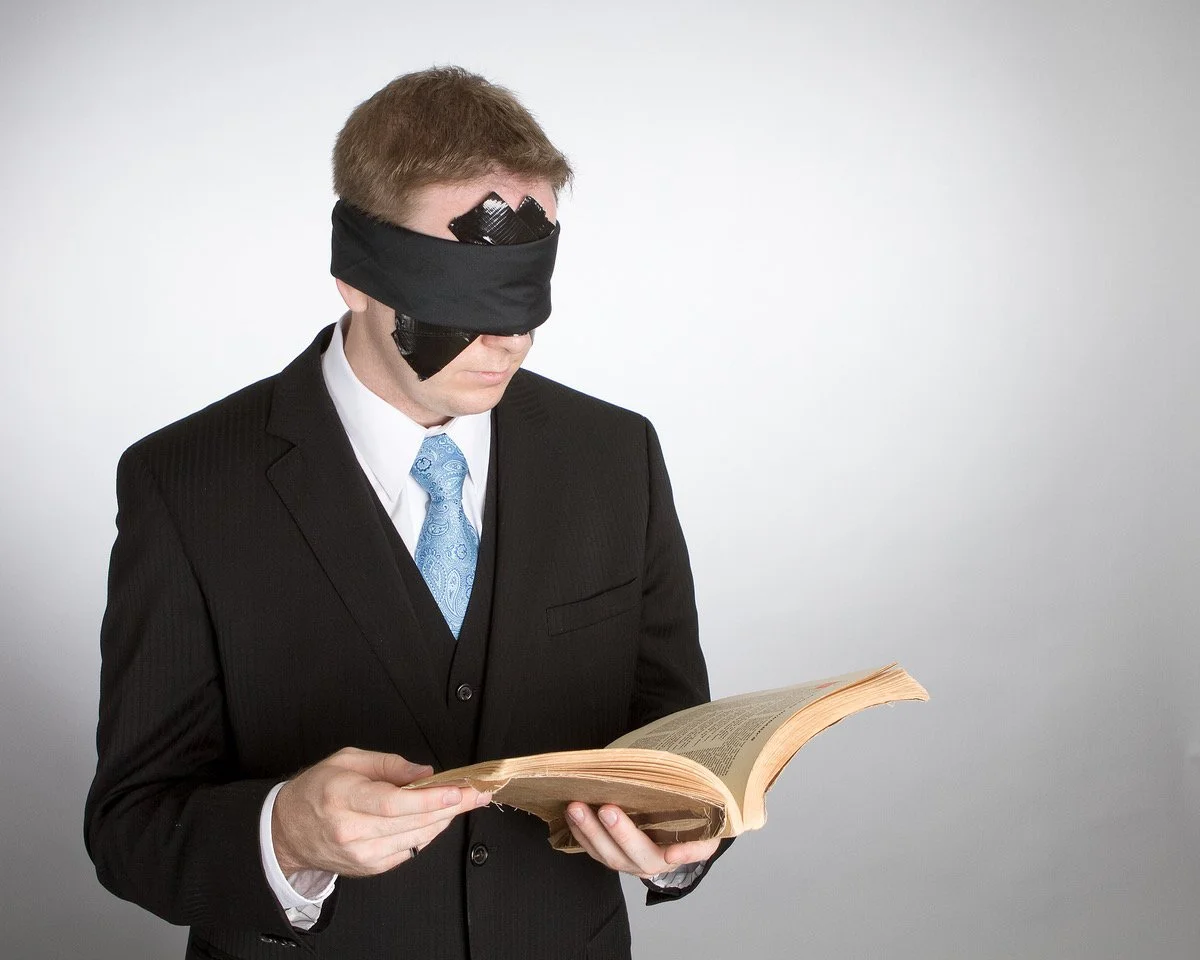
Why does the universe...

Why does the universe continue to do these bewildering things to me? [1] I wrote earlier about my decision to bump Moab is my Washpot to the top of my reading list. Somewhere, more or less in the middle, the learned author digresses into his early love of magic.

In particular, he talks about one of his favourite magic books, Expert Card Technique. This is considered one of the great twentieth century collections of card magic, something I own, something I have spent quite a bit of time with, and something which is still available today as an inexpensive Dover reprint.

I know many people have had a passing interest in magic when they were young. Mr. Fry seems to have had a much deeper understanding that most and his thoughts on the subject were inspiring to me.

Magic, in the form of close up sleight of hand in particular, is an art-form I venerate... My 'chops' as magicians call technique, are not of the first order, it takes the kind of practice a concert musician is prepared to put into his music to perform just the standard pass with a pack of cards...

One particular passage struck me:

I suppose those who not like or approve of magic sense firstly that magicians are the kind of disreputable or vengefully nebbish outsiders who relish putting one over on others and secondly that they themselves, as the victims of a trick, are not quite confident enough in themselves to take it laughingly.

While I don't expect absolutely everyone to enjoy magic, I always marvel at that small percentage that seem to resist enjoying a trick.

I hope it's not that someone has had a bad experience, being picked on or aggravated by a magician in the past. I wonder if I've done something to rub them the wrong way.

I suspect that no one ever explained real magic (the stuff of Harry Potter) isn't real and real magic (the stuff that magicians can actually do) is actually fake. We're not out to convince anyone that we have supernatural powers; we just like to have fun pretending we do. But it sets the stage for a weird metaphysical logical fallacy:

If I can't explain how the trick works, that must mean that it's real magic.

Of course it's a false dichotomy. If you don't consider "I don't know" to be a valid option - certainly most of us are uncomfortable admitting we don't know things - then you back yourself into a corner. And if it's a particularly skillful magician (meaning you won't be able to figure out how anything works) then you are forcing yourself to feel uncomfortable.

Of course, that's not bewildering, that's just a happy coincidence that I would share something neat like that in common with a longtime role model. The bewildering part is that the discussion of magic, is strangely close to a deep and thoughtful discussion of buggery...

The jokes just write themselves. Feel free to leave yours in the comments below.

[1] Arthur Dent in The Hitchhiker's Guide to the Galaxy

The Thinker's Toolkit

I was recently forced to shuffle around material on my many bookshelves (it's turned into an apartment-wide game of Tetris) and I came across a book I had completely forgotten about. When I was younger, it completely changed my outlook on the world.

The Thinker's Toolkit: 14 Powerful Techniques for Problem Solving

How I came to own it is a happy story, at least for me. At UofT, one of the mandatory second-year courses was something called Analysis for Decision Making and Control which was really a course about problem solving (it's now estimated that 3.5% of all tuition fees goes to the committee for the invention of pretentious course names.)

The typical textbook for courses in this program was $120-150 per book and you usually had to buy four or five a year. This one was quite shocking because it was the only book for the course and you could get it for less than $25. You could even get it at Indigo (Amazon had not yet taken over the book world - but never mind that; I'm giving away how old I am).

The book, written by a CIA analyst, discusses different techniques for... well... solving problems. While those were interesting, I am a hardcore math nerd and systematic ways of breaking down problems were really nothing new.

The revelation came to me when the book digresses into evaluating explanations. Think of a murder mystery: five suspects and a pile of clues (evidence) and you're trying to reason out whodunnit. It's no surprise to learn that most have no idea how to evaluate evidence properly.

Look at the evidence...

...comes up often in discussion. Whether it's psychic phenomena, ghosts, conspiracy theorists, or theists - there are lots of people who hold some very silly and untenable beliefs. And most people would claim they hold these beliefs because of some sort of evidence.  But if your tools for evaluating evidence are rubbish then where does that get you?

Here's the method in brief. It's misleading to think of evidence which "supports" a hypothesis. I'll explain why in a moment. It's better to separate the evidence into two categories: consistent and inconsistent.

Inconsistent means it's implausible [1] for both your hypothesis to be true and this piece of evidence to exist. For example, if you can't find your iPod and you think your son borrowed it, that would be implausible if your son had been away at university for the past four months and therefore inconsistentConsistent, then, is just the opposite.

What's crucial is that one piece of evidence can be consistent with multiple hypotheses. If you see something strange in the sky at night, it could be a UFO, a weather balloon, a plane or Iron Man. The evidence (you saw something strange) is consistent with multiple interpretations and doesn't push you towards one over the other. For this reason, when determining which explanation is the "best", consistent evidence doesn't count. You can all but throw it out.

The explanation that is the most likely is not the one with the most consistent evidence. That is probably the most counterintuitive notion in problem solving. Instead, the most likely explanation is the one with the least inconsistent evidence. It's not the one with the most support; instead it's the one with the fewest problems that you pick. [2]

You can (and should) take this a step further and actually go looking for inconsistent evidence. Think "what would prove me wrong?" and see if you can find it. Naturally, no one likes to do this. Who could be eager to be wrong? Apparently Lawrence Krauss:

The two most exciting states to be in are confused and wrong. Because then you know there's a chance you might learn something.

That has to be one of the greatest mind-opening experiences of my life. Although, I've never done drugs, so I don't know what I'm missing. It was so powerful, that I can explain all of this from memory, I don't even need to crack open the book again ten years later to remember what it said. I'm also fortunate to have come across it at the right point in my life where I could actually make use of it.

Looking back at the book in hindsight, it can also be used as a great primer for magic. All of the little pitfalls and traps that people prone to stumble into when solving a problem (like, say, trying to figure out how a piece of magic works) seem to be universal and understanding them makes it even easier to lead people astray and perform some really incredible things.

[1] If you want to actually work out with some rigour what "plausible" is you'd need do some kind of Bayesian analysis. The best resource for this I've come across is Proving History by Richard Carrier.

[2] An even cooler explanation of this concept is provided by Richard Feynman in the Messenger Lectures - generously made available for free online by Bill Gates. In particular, the final lecture on "Seeking New Laws"

Words of Wisdom

Greatly moved by Stephen Fry's Open Letter to the Olympic committee recently published, I took his memoir, Moab Is My Washpot, and bumped it to the front of my reading list. I found something inside. It's not much, but it seemed relevant to me:

[I]f you're going to be a freak, be a complete freak, no point at all in goint at it half-cock

Now, there are those that will say, in this modern technologically sophisticated age, that no one is willing to accept any wisdom unless it comes superimposed onto a catching image, or photo of a cat. They're probably right.

Show and Tell Alexander Bell

I love the idea of integrating technology with performance art. The trouble comes when it happens in a superficial way and the audience leaves with a quaint feeling saying things like "that's clever" or "that's cute" like a six year old who has just repurposed a piece of kitchenware as a space helmet. Show and Tell Alexander Bell is not that.

Part of the 2013 Summerworks festival, it's a stunning example of... of... I have no idea how to complete that sentence because I've never seen anything quite like it. The title doesn't tell you nearly enough. There is dance - lots of it. Also some singing, not very much. Comedy, certainly. And plentiful and interesting visual elements which seem to counterpoint the surrealism of the underlying metaphor. (I've always wanted to work that into a sentence!) And there's even a magic trick or three in there for good measure.

It certainly shows us that there's is a wide open road ahead for integrating technology and art.

If you are in Toronto over the next week, go.

Two things which are important to remember:

  1. Remember to bring your cell phone.
  2. You'll never look at phone sex the same way again.

Show & Tell Alexander Bell

@ The Summerworks Performance Festival

by Ars Mechanica Theatre

Select performances August 8 - 18 at the Lower Ossington Theatre

Tickets $15

You can see more the of the 2013 Summerworks Program here.

Last bit of Prezels

One last piece of magic for Wendy's #ExpectToBeAmazed campaign.

I'm actually facing a second camera which is supposed to have an extreme close up of my hands so you can actually see the coins. Not sure what happened to that footage. Oh well.

And remember, actually visit the Wendy's Canada Facebook Page to enter to win a trip for two to Las Vegas.