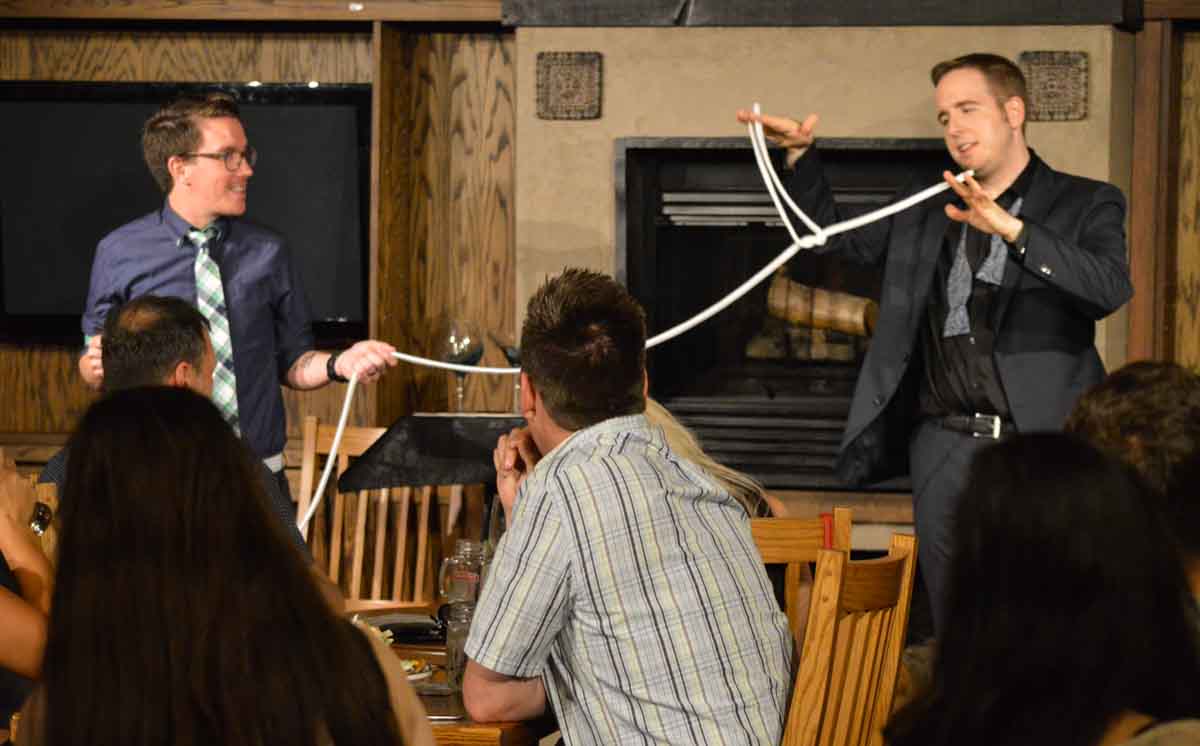
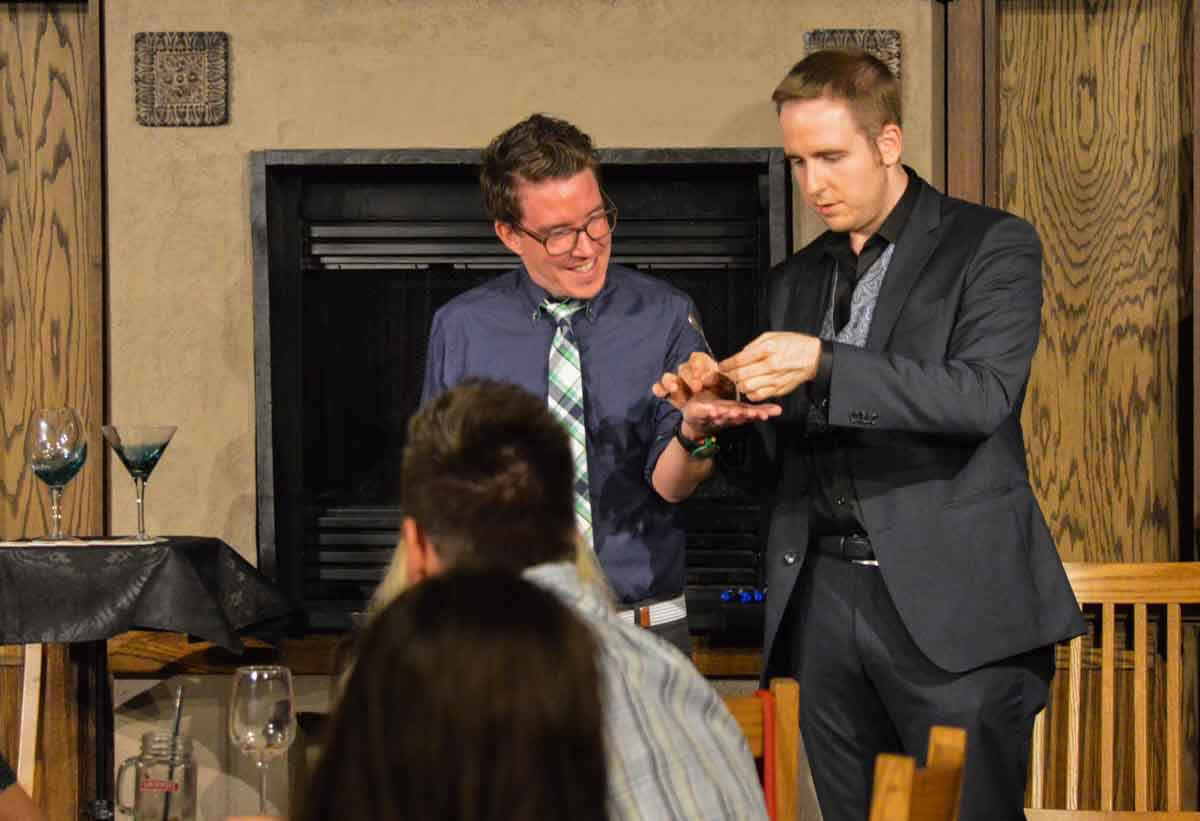
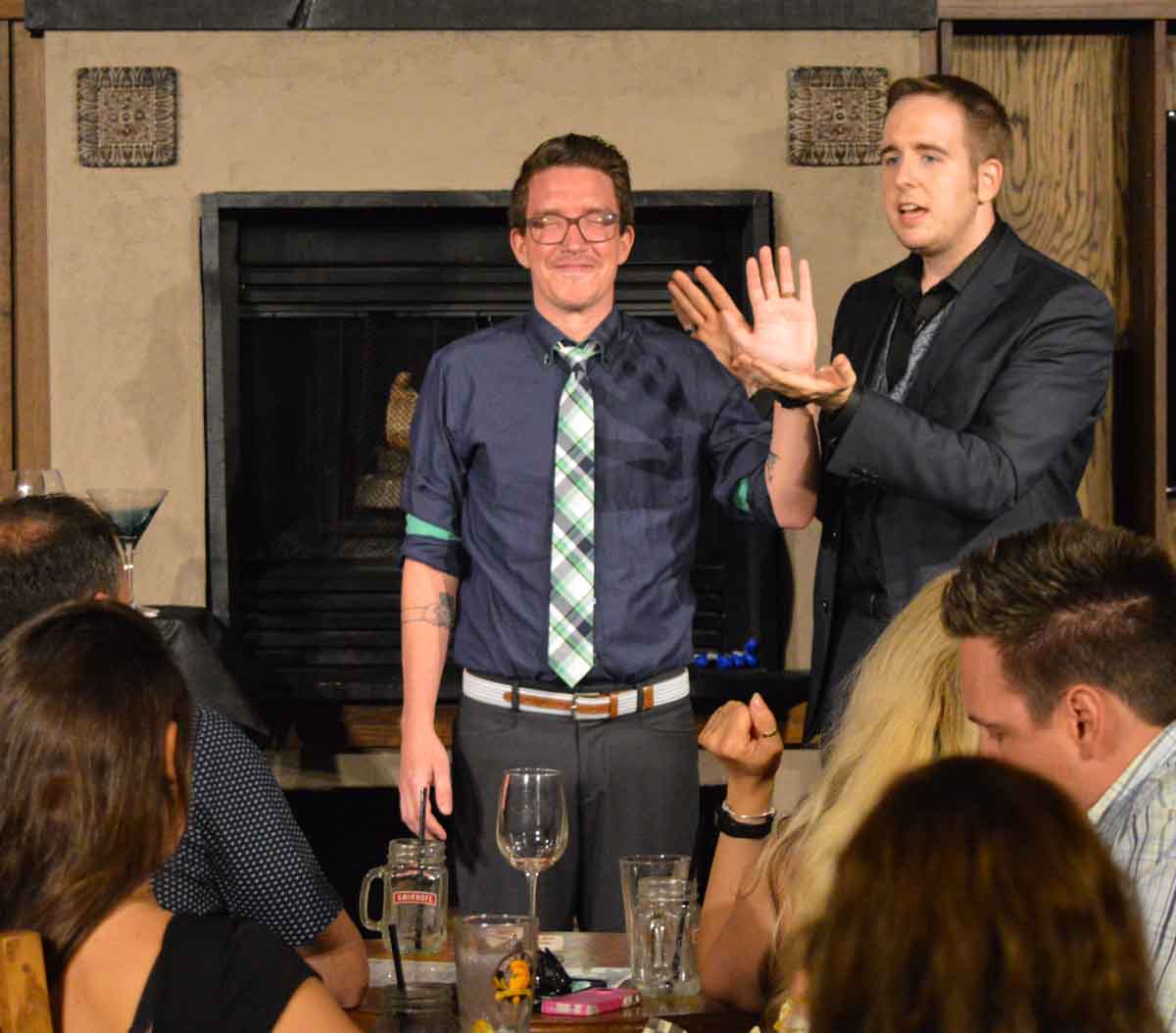
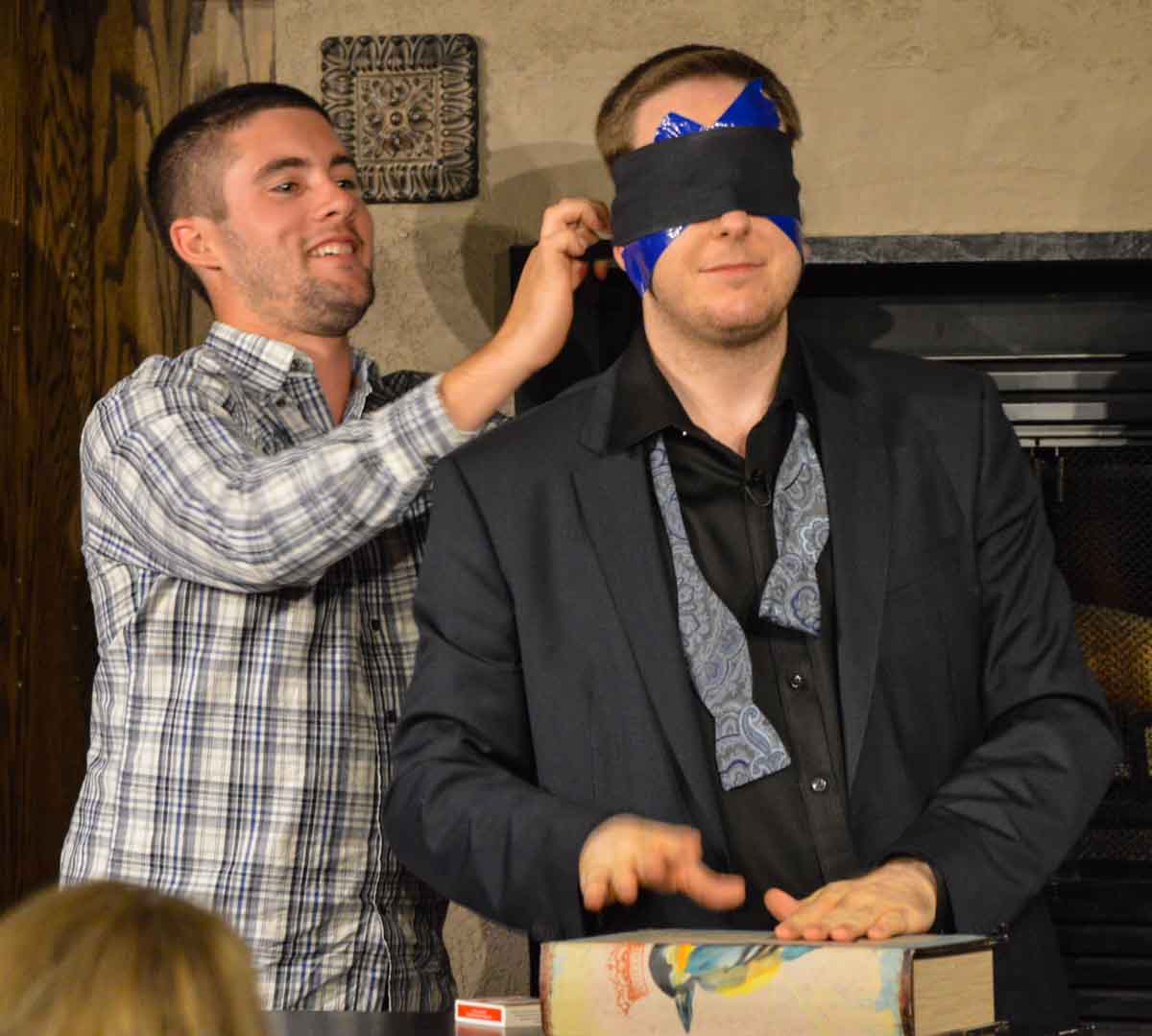
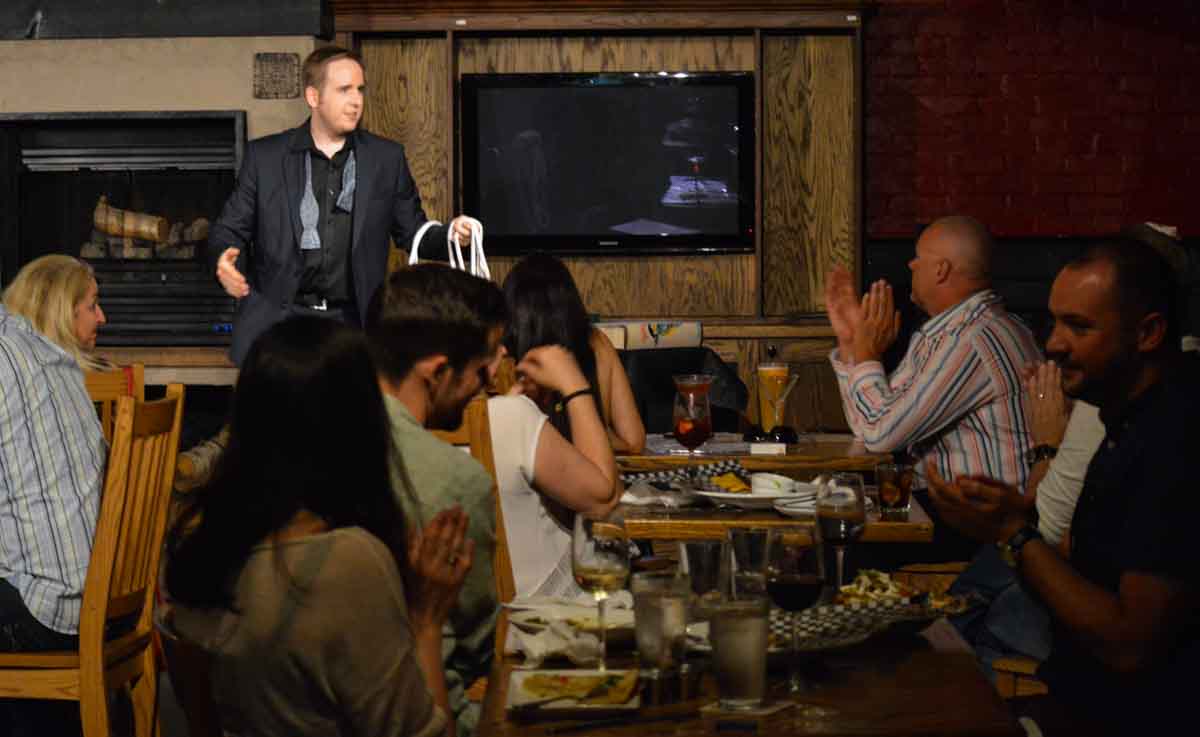
Photos from Magic & Martini in Oakville

Last night we had a fantastic sold-out performance of Magic & Martini in Oakville at O'Finn's Irish Temper. It was a very hot day, as you can tell, I wasn't even willing to do up my tie:

James Alan Bow Tie

(Those who wish to complain about my lack of decorum can write a strongly worded letter to the producer at complaints@grandspirits.com

Thank you to everyone who attended, we had a wonderful time (with the help of some air conditioning.) Here are some photos from the event by Tyler Sol Williams.

Keeping Secrets

There's a survey you can take at www.keepingsecrets.org. We all keep secrets and here are some that we keep by category according to researcher Michael Slepian.

Compiled by Michael Slepian | www.keepingsecrets.org

Compiled by Michael Slepian | www.keepingsecrets.org

I'm in the business of keeping secrets and I have mixed feelings about it. The secrets I keep tend to be like nuclear codes, except harmless. There is a feeling about magic — which I think is correct — is that if you saw the sausage being made, you wouldn't want to eat it. So the secrets of how magic tricks work are best preserved, not for any special traditional reason, but for the benefit of the audience. But they remain available for those willing to actually do the research: to wade through the large body of literature we have assembled over the past century and a half. Our secrets remain hidden in plain sight. 

Imitating Success

There's a great short article on Mind Your Decisions about Game Theory and the dangers of trying to copy people who appear to be successful.

Game Theory is one of the most unfortunately named academic disciplines because it gives the impression of being rather trivial and not worth paying attention to. After all, serious people don't play games. In reality it's about the process of decision making in the presence of others who are trying to make decisions. So it would more appropriately be called "life theory". 

He expands on a very insightful video about survivorship bias an why simply modelling your behaviour and decisions after people who are more successful than you really isn't a good idea:

If you were like me when I first learned of this concept, it's difficult to immediately see why this is such a big problem. But when you look at the numbers that underpin it, it really is true.

I remember my first boss (or second, depending on how you count... it was complicated) thought treated The Seven Habits of Highly Effective People as a kind of bible that all of the staff would benefit from reading. Of course, the implication is that it's those habits which make them effective. Even then I knew correlation doesn't equal causation. It especially doesn't equal causation when you are dealing with a biased sample where the failures are simply not on your radar. 

There is one more thing I also noticed while I was still in the martial arts world, and see something similar happen in the world of magic. People who are successful behave in a certain way after becoming successful, but that doesn't necessarily represent the process they went through to become successful. And after a while, they forget what that process was and how important it was.

In martial arts, all of the people I looked up to did a large amount of competition when they were younger. As they got older, they stopped competing, but still retained all of the skill and discipline that they gained from it. Now, when mentoring the younger generation, they almost universally guided their students away from competition feeling it was unnecessary. It was unnecessary for them because they had done it already, but it still had value for those who had not yet done it. I think they also felt they could convey their accumulated wisdom without having to put us youngsters through the middleman of real world experience.

The same thing happened in magic as I was pressured early on in my career to raise my prices and stay home more, even though I didn't have the experience to command higher fees. But I knew what I was being told was good advice for the people giving it, but not necessarily good for me. For that reason, for the two and a half years that Magic Tonight ran, it was always in smaller venues. Two shows of fifty people had more value than one show of a hundred people. I knew that experience mattered. 

And when you see the people you look up to, it's important not to try and imitate the way they behave now, but the way they were behaving on the road to where they are now. 

Magic is in the Details

This weekend, I was out in Uxbridge, Ontario — a quiet out of the way township which the residents described to me as their "own little piece of heaven" — for a private birthday celebration. Event planning is all about the details because that's what lends an event a feeling of authenticity that people will remember, instead of a cookie-cutter banquet which can be forgotten between desert and the walk to the car door. 

After my show, there was a lovely table laid out with dozens of handcrafted magic-themed cookies. (I actually think the birthday girl made them all herself... so much for a relaxing birthday.) Always be on the lookout for small details that will make your next event magic!

magic cookies